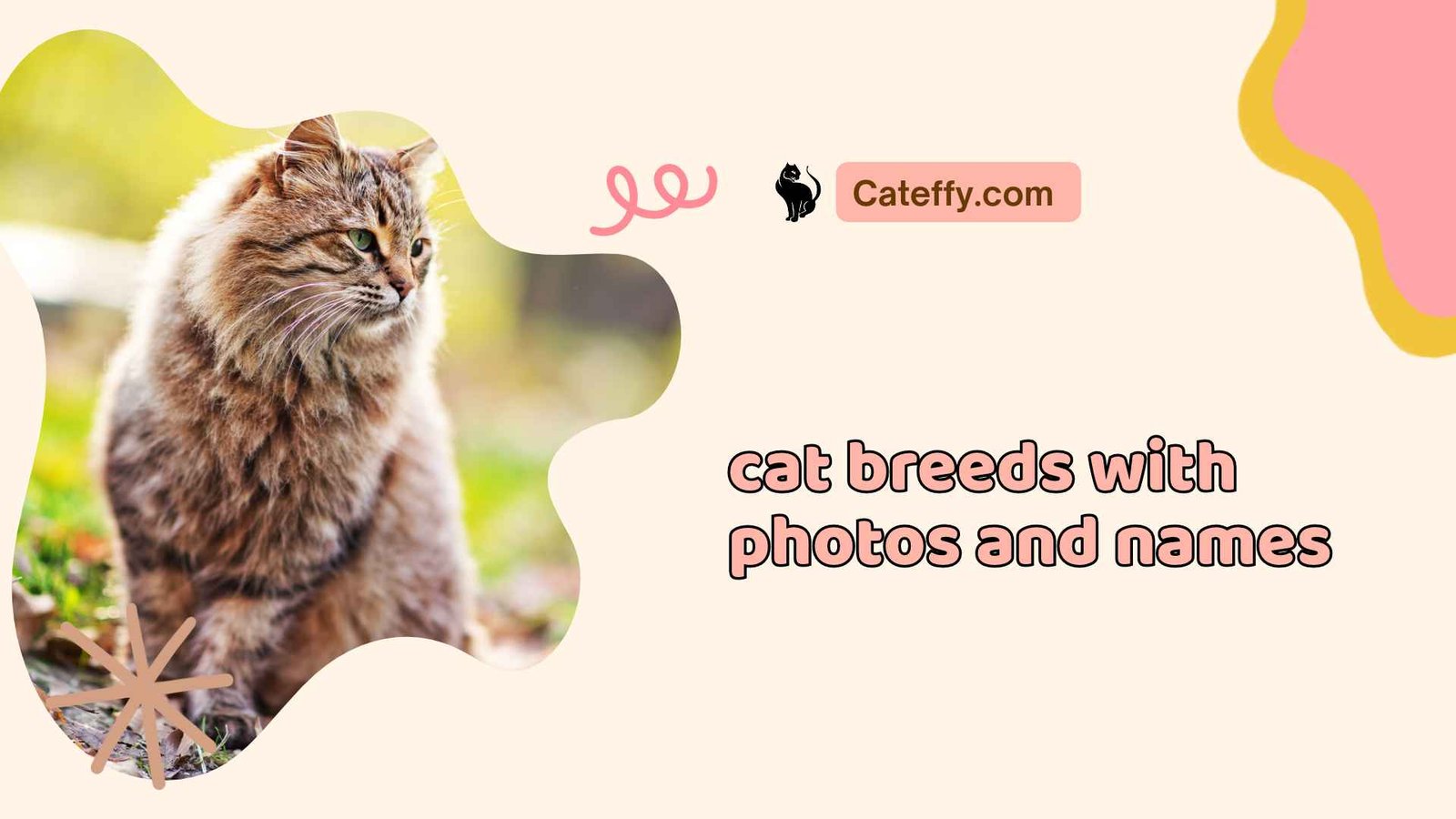
If you are searching for cat breeds with photos and names, you probably want more than a long list of cute cats. You want to know what each breed looks like, how big it gets, what its personality is like, how much grooming it needs, and whether it could fit your lifestyle.
This guide covers 25 recognizable cat breeds, from the giant Maine Coon and fluffy Persian to the playful Bengal and nearly hairless Sphynx. Use the quick comparison tables and breed profiles to narrow down the cats that best match your home, family, and preferences.
Quick Answer: What Are the Most Popular Cat Breeds?
Some of the best-known cat breeds in the United States include Maine Coon, Ragdoll, Persian, Siamese, Bengal, British Shorthair, American Shorthair, Sphynx, Russian Blue, Abyssinian, Scottish Fold, and Siberian. Each has a different combination of appearance, temperament, activity level, and grooming needs, so the “best” breed depends on your lifestyle.
Cat Breeds at a Glance
| Cat Breed | Coat | Activity | Personality | Grooming |
| Maine Coon | Long | Medium | Friendly, social | Medium |
| Ragdoll | Long | Low–Medium | Gentle, affectionate | Medium |
| Persian | Long | Low | Calm, sweet | High |
| Siamese | Short | High | Vocal, social | Low |
| Bengal | Short | High | Active, curious | Low |
| British Shorthair | Short | Low–Medium | Calm, independent | Low–Medium |
| American Shorthair | Short | Medium | Adaptable, easygoing | Low |
| Sphynx | Very short/hairless | High | Affectionate, playful | Medium–High |
| Russian Blue | Short | Medium | Quiet, intelligent | Low |
| Siberian | Long | Medium–High | Friendly, playful | Medium–High |
| Abyssinian | Short | High | Curious, energetic | Low |
| Scottish Fold | Short/Long | Low–Medium | Sweet, adaptable | Low–Medium |
| Birman | Long | Medium | Gentle, people-oriented | Medium |
| Norwegian Forest Cat | Long | Medium | Independent, friendly | Medium–High |
| Exotic Shorthair | Short | Low–Medium | Calm, affectionate | Medium |
| Devon Rex | Short, curly | High | Playful, people-loving | Low–Medium |
| Cornish Rex | Short, curly | High | Energetic, affectionate | Low |
| Egyptian Mau | Short | High | Intelligent, athletic | Low |
| Burmese | Short | High | Affectionate, outgoing | Low |
| Oriental Shorthair | Short | High | Vocal, social | Low |
| Turkish Angora | Semi-long | High | Intelligent, active | Medium |
| Somali | Long, silky | High | Playful, curious | Medium |
| American Curl | Short/Long | Medium | Friendly, adaptable | Low–Medium |
| Manx | Short/Long | Medium | Playful, loyal | Low–Medium |
| Tonkinese | Short | High | Social, affectionate | Low |
Individual cats can differ considerably. Breed tendencies are useful for comparison, but they do not guarantee a particular personality.
25 Cat Breeds With Photos and Names
1. Maine Coon
Photo: Maine Coon cat
The Maine Coon is one of the most recognizable large domestic cat breeds. Its long coat, prominent ears, bushy tail, and substantial build give it a distinctive appearance.
Maine Coons are often described as friendly and social without necessarily demanding constant attention. Their size makes them particularly appealing to people who want a striking, substantial-looking cat.
Best for: Families, multi-pet households, and owners who enjoy larger cats.
Keep in mind: The long coat requires regular grooming, and a large cat needs appropriately sized litter boxes, carriers, beds, and scratching equipment.
2. Ragdoll
Photo: Ragdoll cat
Ragdolls are large, blue-eyed cats known for their soft semi-long coats and pointed coloring. They have a reputation for being gentle and affectionate.
Their relatively relaxed temperament can make them attractive to people looking for a companion cat rather than an extremely energetic breed.
Best for: Families and people wanting a calm, affectionate companion.
Keep in mind: Their coat still needs regular brushing, particularly around areas where tangles can develop.
3. Persian
Photo: Persian cat
The Persian is famous for its long, luxurious coat, rounded face, and calm expression. Persian cats are generally associated with a quieter, affectionate lifestyle.
Their beautiful appearance comes with a significant grooming commitment. Regular brushing is important for keeping the coat manageable.
Best for: Owners who enjoy grooming and prefer a calmer cat.
Keep in mind: The Persian’s facial structure can vary, so prospective owners should pay attention to responsible breeding and overall health rather than choosing solely for an exaggerated appearance.
4. Siamese
Photo: Siamese cat
The Siamese is instantly recognizable by its sleek body, color-point pattern, blue eyes, and distinctive personality.
Siamese cats tend to be social, intelligent, active, and communicative. They often enjoy interaction with their people and may become bored without enough mental stimulation.
Best for: Active households that want an interactive companion.
Keep in mind: This is not usually the ideal choice if you want a very quiet, independent cat.
5. Bengal
Photo: Bengal cat
Bengals stand out because of their spotted or marbled coats, which give them a wild-looking appearance while they remain domestic cats.
They are energetic and curious. A Bengal may enjoy climbing, chasing toys, exploring, and learning interactive games.
Best for: Experienced owners and active households.
Keep in mind: A beautiful coat does not mean a low-maintenance personality. Bengals often need considerable enrichment and daily interaction.
6. British Shorthair
Photo: British Shorthair cat
The British Shorthair is known for its rounded head, dense coat, sturdy build, and famously plush appearance. Blue-gray is one of its best-known colors, although the breed comes in numerous colors and patterns.
These cats are generally easygoing and can be affectionate while still appreciating their independence.
Best for: Families and people who want a relatively calm companion.
Keep in mind: Their laid-back personality does not eliminate the need for exercise and weight management.
7. American Shorthair
Photo: American Shorthair cat
The American Shorthair is a sturdy, adaptable breed with a short coat and a broad range of colors and patterns.
It can be a practical choice for people who want a traditional-looking cat without the grooming requirements of a long-haired breed.
Best for: First-time owners, families, and busy households.
Keep in mind: Individual personality varies, so meeting the actual cat is more informative than choosing from appearance alone.
8. Sphynx
Photo: Sphynx cat
The Sphynx is famous for its hairless appearance, although its skin is typically covered with a fine layer of fuzz rather than being completely bare.
Sphynx cats are often highly social, affectionate, curious, and playful. Their lack of a conventional fur coat does not mean they require no grooming.
Best for: People who want an interactive, unusual-looking companion.
Keep in mind: Skin care and temperature management deserve particular attention. Hairless does not mean maintenance-free.
9. Russian Blue
Photo: Russian Blue cat
The Russian Blue has a short, dense blue-gray coat with a distinctive silvery appearance. It is often associated with a quiet, graceful temperament.
Many owners appreciate the breed’s combination of elegance and relatively straightforward coat care.
Best for: Quieter households and people who prefer a less demanding grooming routine.
Keep in mind: Some Russian Blues may take time to become comfortable around unfamiliar people.
10. Siberian
Photo: Siberian cat
The Siberian is a large, powerful cat with a thick coat suited to cold climates. Its rounded features and full coat give it a classic forest-cat appearance.
Siberians are generally active and playful but can also be affectionate family companions.
Best for: Families looking for a larger long-haired cat.
Keep in mind: Their substantial coat requires regular attention, especially during periods of heavier shedding.
11. Abyssinian
Photo: Abyssinian cat
The Abyssinian is an elegant short-haired breed recognized for its ticked coat, athletic build, and alert expression.
This is an active breed that often enjoys climbing, exploring, playing, and interacting with its surroundings.
Best for: Active owners who enjoy playful cats.
Keep in mind: If you want a cat that spends most of the day sleeping on the sofa, an Abyssinian may not be your best match.
12. Scottish Fold
Photo: Scottish Fold cat
The Scottish Fold is best known for its distinctive folded ears, although not every kitten develops the characteristic fold.
Its rounded head and large-looking eyes contribute to its teddy-bear-like appearance.
Best for: People attracted to the breed’s distinctive appearance and generally companionable temperament.
Keep in mind: The ear-folding mutation is associated with skeletal and cartilage abnormalities. Responsible breeders and veterinary guidance are especially important when considering this breed.
13. Birman
Photo: Birman cat
The Birman is a long-haired pointed breed known for its blue eyes and contrasting white paws.
It combines an elegant appearance with a generally affectionate, people-oriented personality.
Best for: Families and owners wanting a sociable long-haired cat.
Keep in mind: Regular brushing helps keep the semi-long coat comfortable and attractive.
14. Norwegian Forest Cat
Photo: Norwegian Forest Cat
The Norwegian Forest Cat is a large, robust breed with a thick coat, substantial tail, and strong climbing ability.
Its appearance reflects its northern origins, and it can be an excellent choice for people who love the look of a big forest cat.
Best for: Owners who want a large, active, long-haired cat.
Keep in mind: Its coat and size both require more household preparation than a typical short-haired cat.
15. Exotic Shorthair
Photo: Exotic Shorthair cat
Often described as a short-haired alternative to the Persian, the Exotic Shorthair has a plush coat and rounded appearance.
It can appeal to people who love the Persian look but prefer a shorter coat.
Best for: People wanting a calm companion with a plush appearance.
Keep in mind: A shorter coat does not automatically remove all grooming or facial-care considerations.
16. Devon Rex
Photo: Devon Rex cat
The Devon Rex is recognizable by its large ears, slender body, expressive face, and soft, curly coat.
These cats are often playful, curious, and strongly interested in their human companions.
Best for: People who want an energetic and interactive cat.
Keep in mind: Their unusual coat is delicate, so grooming should be gentle.
17. Cornish Rex
Photo: Cornish Rex cat
The Cornish Rex has a short, wavy coat and a sleek, athletic body. Its appearance is quite different from that of a traditional fluffy cat.
Cornish Rex cats are generally active and playful and often enjoy staying close to people.
Best for: Active households and owners who want an unusual-looking breed.
Keep in mind: Their fine coat offers less insulation than a typical dense coat, so comfortable indoor temperatures matter.
18. Egyptian Mau
Photo: Egyptian Mau cat
The Egyptian Mau is known for its naturally spotted coat and athletic appearance. It is one of the breeds that can appeal strongly to people who want a cat with a distinctive patterned coat.
These cats tend to be intelligent and active.
Best for: Owners who enjoy interactive play and energetic cats.
Keep in mind: Provide climbing opportunities, toys, and regular mental stimulation.
19. Burmese
Photo: Burmese cat
Burmese cats are sleek, muscular, short-haired cats with expressive eyes and a strong reputation for being people-oriented.
They often enjoy attention and interactive play.
Best for: People who want a social, affectionate cat.
Keep in mind: A highly social cat may not thrive with long periods of isolation every day.
20. Oriental Shorthair
Photo: Oriental Shorthair cat
The Oriental Shorthair has a sleek body, large ears, a long profile, and a huge variety of possible coat colors and patterns.
Like its Siamese relatives, it can be highly social and vocal.
Best for: Owners who want an interactive, communicative cat.
Keep in mind: These cats often benefit from companionship, toys, climbing structures, and daily engagement.
21. Turkish Angora
Photo: Turkish Angora cat
The Turkish Angora is an elegant, fine-boned breed with a silky semi-long coat. Although white cats are strongly associated with the breed, Turkish Angoras can occur in other colors and patterns.
They tend to be intelligent, active, and curious.
Best for: Owners who enjoy energetic and elegant cats.
Keep in mind: Their active nature means they benefit from opportunities to climb and explore safely.
22. Somali
Photo: Somali cat
The Somali is essentially a long-haired relative of the Abyssinian type, with a luxurious ticked coat and athletic build.
Somalis are playful and curious and often enjoy interactive environments.
Best for: Active families and owners who want a playful long-haired cat.
Keep in mind: Their coat requires more brushing than a typical short-haired cat.
23. American Curl
Photo: American Curl cat
The American Curl is famous for its ears, which curve backward in a distinctive arc. The breed can have either short or long hair.
Its unusual ears make it one of the easiest breeds to recognize in a photo.
Best for: Families looking for a distinctive but generally adaptable companion.
Keep in mind: Handle the ears carefully and follow appropriate veterinary and grooming guidance.
24. Manx
Photo: Manx cat
The Manx is famous for its short or absent tail, although tail length can vary considerably among individual cats.
The breed has a rounded appearance and can be playful, intelligent, and attached to its family.
Best for: Owners interested in distinctive breeds and unique body types.
Keep in mind: The genetics responsible for the Manx tail can also be associated with health concerns, so responsible breeding is particularly important.
25. Tonkinese
Photo: Tonkinese cat
The Tonkinese combines characteristics associated with Siamese and Burmese ancestry. It has a sleek body, short coat, and highly social personality.
Tonkinese cats can be playful, affectionate, and interactive.
Best for: Families and people who want an involved companion.
Keep in mind: This breed generally does best when it receives plenty of social interaction and play.
Which Cat Breed Is Best for You?
The best cat breed is not necessarily the most popular or the cutest one in a photograph. Start with your lifestyle.
If You Want a Calm Cat
Consider breeds such as:
- Ragdoll
- British Shorthair
- Persian
- Russian Blue
- Exotic Shorthair
A calmer breed can be a good fit for someone who prefers a relaxed household, but individual cats can still be energetic or demanding.
If You Want an Active Cat
Consider:
- Bengal
- Abyssinian
- Siamese
- Egyptian Mau
- Oriental Shorthair
- Cornish Rex
- Devon Rex
These breeds can be especially rewarding for owners who enjoy interactive play and enrichment.
If You Want a Large Cat
Look at:
- Maine Coon
- Ragdoll
- Siberian
- Norwegian Forest Cat
Remember that a large cat requires appropriately sized equipment and enough room to move comfortably.
If You Want a Low-Grooming Coat
Short-haired breeds can reduce brushing time. Options include:
- American Shorthair
- British Shorthair
- Russian Blue
- Siamese
- Burmese
- Bengal
“Low grooming” does not mean “no grooming.” Every cat benefits from routine coat, nail, dental, and general care.
If You Want a Long-Haired Cat
Popular choices include:
- Maine Coon
- Ragdoll
- Persian
- Siberian
- Birman
- Norwegian Forest Cat
- Turkish Angora
Long hair is beautiful, but it requires a realistic grooming routine.
Cat Breed Comparison by Lifestyle
| Your Priority | Breeds Worth Considering |
| Calm companion | Ragdoll, Persian, British Shorthair |
| Active playmate | Bengal, Abyssinian, Siamese |
| Large size | Maine Coon, Ragdoll, Siberian |
| Long coat | Persian, Maine Coon, Birman |
| Short coat | American Shorthair, Siamese, Burmese |
| Distinctive appearance | Sphynx, Scottish Fold, American Curl |
| Social personality | Siamese, Burmese, Tonkinese |
| Athletic build | Abyssinian, Bengal, Egyptian Mau |
| Quiet household | Russian Blue, British Shorthair |
| Interactive household | Oriental Shorthair, Siamese, Bengal |
Cat Breed vs. Mixed-Breed Cat: Which Should You Choose?
A registered breed can offer more predictable physical characteristics and certain general behavioral tendencies. That can be useful if you have specific preferences about size, coat type, or activity level.
However, a mixed-breed or domestic cat can be an excellent companion too. Shelters and rescues have cats with wonderful personalities, and their individual temperament can be more important to your daily experience than a breed label.
If you are adopting, spend time interacting with the individual cat. Ask shelter staff about its behavior around people, children, other animals, handling, and play.
What to Look for in Cat Breed Photos
Photos are useful for recognizing breeds, but they should not be your only method of identification.
Pay attention to:
- Head shape
- Ear size and placement
- Eye shape and color
- Coat length
- Coat texture
- Color and pattern
- Body size and proportions
- Tail shape
- Leg length
- Distinctive breed characteristics
A photo alone cannot reliably prove that a cat is a particular breed. Many domestic cats share physical traits with pedigreed breeds.
Common Mistakes When Choosing a Cat Breed
Choosing Only by Appearance
A beautiful cat may not have the temperament or activity level you want.
A Bengal may look spectacular but require considerably more stimulation than you expected. A Persian may look wonderfully relaxed but require much more coat care than a short-haired cat.
Assuming Every Cat of a Breed Has the Same Personality
Breed tendencies are useful, but cats are individuals. Genetics, early socialization, environment, age, and previous experiences all influence behavior.
Ignoring Grooming Requirements
Long-haired cats can require regular brushing. Hairless cats can still need skin care. Even short-haired cats need routine maintenance.
Think about how much time you can realistically spend on grooming every week before choosing a breed.
Buying From an Irresponsible Breeder
If you choose a pedigreed kitten, research the breeder carefully.
Look for:
- Transparent health information
- Appropriate veterinary care
- Clean living conditions
- Healthy adult cats
- Honest answers about hereditary conditions
- Proper socialization
- A willingness to discuss the breed’s potential health concerns
Avoid breeders who focus entirely on rare colors, extreme physical features, or quick sales.
Expert Tips for Choosing the Right Cat Breed
1. Match energy level before appearance.
A good personality match usually matters more than choosing the prettiest breed.
2. Consider your schedule.
If you work long hours, think carefully before choosing a highly social or demanding breed.
3. Think about grooming honestly.
Ask yourself whether you will still want to brush a long-haired cat regularly six months from now.
4. Consider your home environment.
Active cats benefit from vertical space, scratching posts, climbing structures, and interactive toys.
5. Meet the individual cat.
Whenever possible, spend time with the cat before making a decision.
6. Ask about health, not just looks.
Responsible breeding should prioritize health and welfare rather than exaggerated physical traits.
7. Consider adoption.
Breed-specific rescues, shelters, and general animal rescues can be excellent places to find a cat whose personality already is easier to assess.
Cat Breed Selection Checklist
- I know how much grooming I can realistically provide.
- I understand the breed’s typical energy level.
- I have enough space and appropriate enrichment.
- I have considered the cat’s expected adult size.
- I understand that breed does not guarantee personality.
- I have researched potential breed-related health concerns.
- I can afford routine veterinary care.
- I have considered adoption and rescue options.
- I will choose a responsible breeder if purchasing a pedigreed cat.
- I am choosing for long-term compatibility rather than appearance alone.
Frequently Asked Questions
What are the most popular cat breeds in the USA?
Maine Coon, Ragdoll, British Shorthair, Persian, Siamese, Bengal, American Shorthair, Sphynx, and Siberian are among the best-known breeds in the United States. Popularity can vary depending on the organization and the year.
What is the biggest domestic cat breed?
The Maine Coon is widely recognized as one of the largest domestic cat breeds. Individual size varies, so breed alone does not guarantee that a particular cat will become exceptionally large.
What is the best cat breed for families?
There is no single best breed for every family. Ragdoll, British Shorthair, American Shorthair, Birman, and other social, adaptable breeds may be worth considering, but the individual cat’s temperament is equally important.
What is the best cat breed for first-time owners?
American Shorthair, British Shorthair, and other relatively adaptable cats can be good choices for beginners. A calm adult rescue cat can also be an excellent first cat because its personality is often easier to evaluate than a young kitten’s.
Which cat breeds require the most grooming?
Long-haired breeds such as Persian, Maine Coon, Ragdoll, Siberian, Birman, and Norwegian Forest Cat generally require more coat maintenance than short-haired breeds.
Which cat breeds are very active?
Bengal, Abyssinian, Siamese, Oriental Shorthair, Egyptian Mau, Cornish Rex, and Devon Rex are examples of breeds often associated with high activity and curiosity.
Are hairless cats completely hairless?
No. The Sphynx, for example, is famous for its hairless appearance but can have a fine layer of fuzz. Hairless cats can still require regular skin care.
Can you identify a cat breed from a photo?
A photo can provide clues about appearance, but it cannot always establish a cat’s breed. Many domestic cats resemble recognized breeds without being pedigreed cats.
Are mixed-breed cats good pets?
Absolutely. Domestic mixed-breed cats can be wonderful companions. Personality, health, socialization, and compatibility with your household often matter more than having a particular breed.
How many cat breeds are there?
The number depends on the cat registry because different organizations recognize different breeds. For example, TICA states that it currently recognizes 71 breeds, while breed lists and classifications can differ between organizations.
Conclusion
The best cat breed for you is the one whose temperament, activity level, grooming needs, size, and care requirements fit your everyday life.
If you want a giant, friendly companion, explore the Maine Coon or Ragdoll. If you prefer a short-haired, adaptable cat, consider the American Shorthair or British Shorthair. For an energetic and interactive companion, Bengal, Siamese, or Abyssinian may be more suitable. And if appearance is your priority, distinctive breeds such as Sphynx, Scottish Fold, and American Curl are easy to recognize.
Use photos to narrow down the looks you love, but use temperament and care requirements to make the final decision. A cat that fits your lifestyle is far more likely to become a happy, long-term companion.

I am Eliza Montgomery, a passionate writer with a love for discovering useful information and sharing it with others. I enjoy researching new topics, finding meaningful details, and turning them into content that readers can understand without feeling overwhelmed. Through my writing, I aim to make every topic more interesting, practical, and helpful.
Books by Eliza Montgomery:
- A Collection of Useful Discoveries
- The Thoughtful Reader’s Guide
 Amelia Rowan
 Eleanor Whitaker